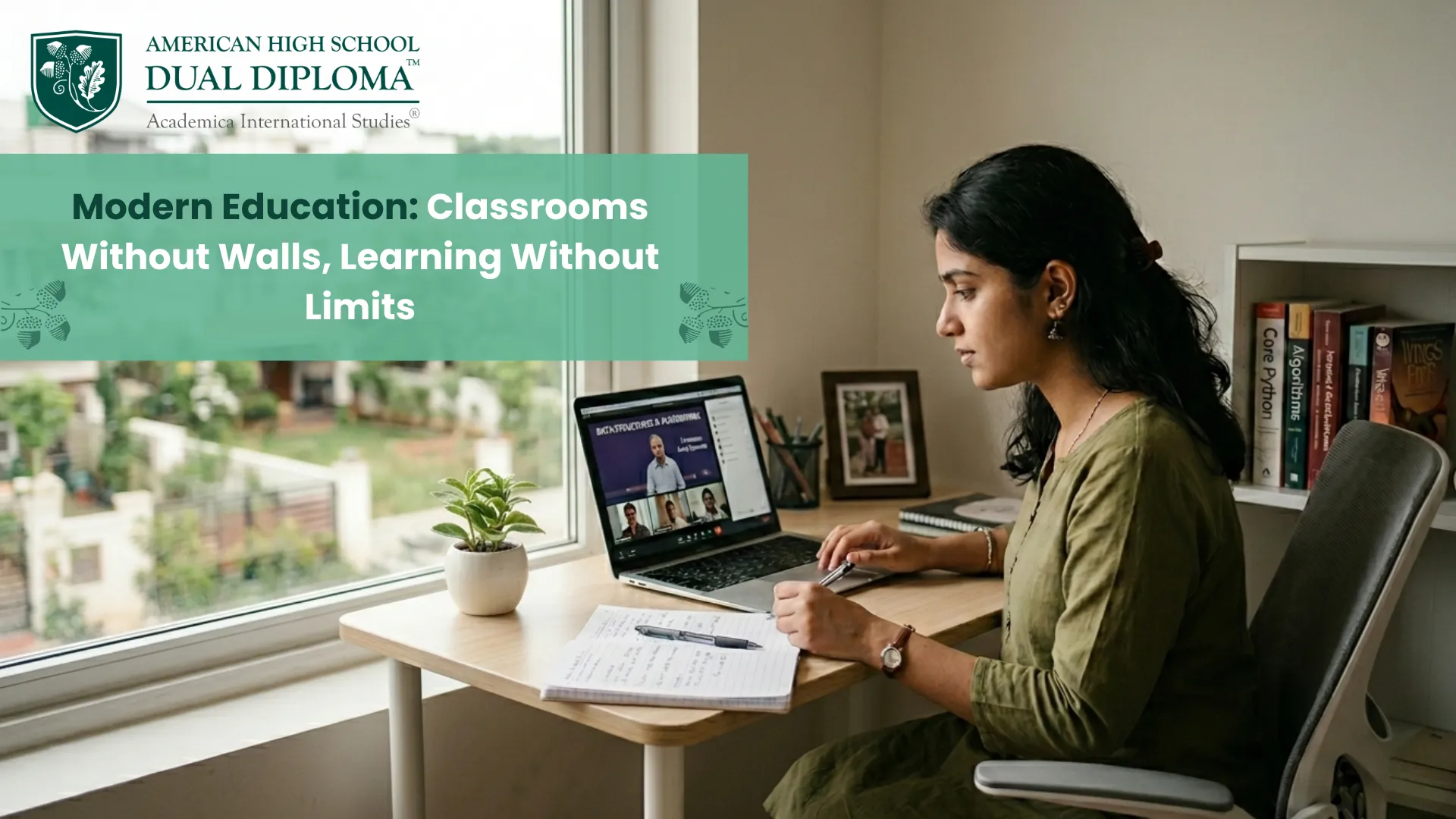
Modern Education: Classrooms Without Walls, Learning Without Limits
The AIS Dual Diploma Programme is a strong example of how modern education is transforming learning opportunities for students worldwide. Across more than 36 countries, hundreds of thousands of students have benefited from AIS, reflecting both the growth of virtual education and its increasing acceptance worldwide.
Education today is gradually moving beyond the limitations of physical classrooms, giving rise to structured learning programmes supported by digital platforms.
The core idea behind modern education is simple: anyone can learn from anywhere, provided they have access to the right resources, guidance, and the willingness to learn.
How Does Modern Education Support Personalised Learning?
One of the most meaningful developments in modern education is the growing emphasis on personalisation. Digital platforms now make it possible for students to learn at their own pace.
Students who require more time can revisit concepts without pressure, while those who grasp ideas quickly can progress at a pace better suited to them.
This personalised approach is reflected in programmes such as AIS. For instance, when a student’s academic performance declines, teachers and academic coaches step in with targeted guidance, helping the student regain momentum and confidence.
How Is Technology Transforming Modern Education?
Technology is no longer an external support to education; it has become an integral part of the system itself.
Within programmes like the AIS Dual Diploma, learning takes place through a connected digital ecosystem where students access coursework, submit assignments, and remain in continuous academic dialogue with teachers based in the United States.
Regular progress reports are shared throughout the academic term, helping both students and educators stay aligned on learning outcomes and overall progress.
Learning has also become more engaging than ever before. Concepts once confined to textbooks can now be explored through simulations, visual models, and interactive tools, making even complex subjects easier to understand.
How Does Digital Learning Enhance Teacher-Student Interaction?
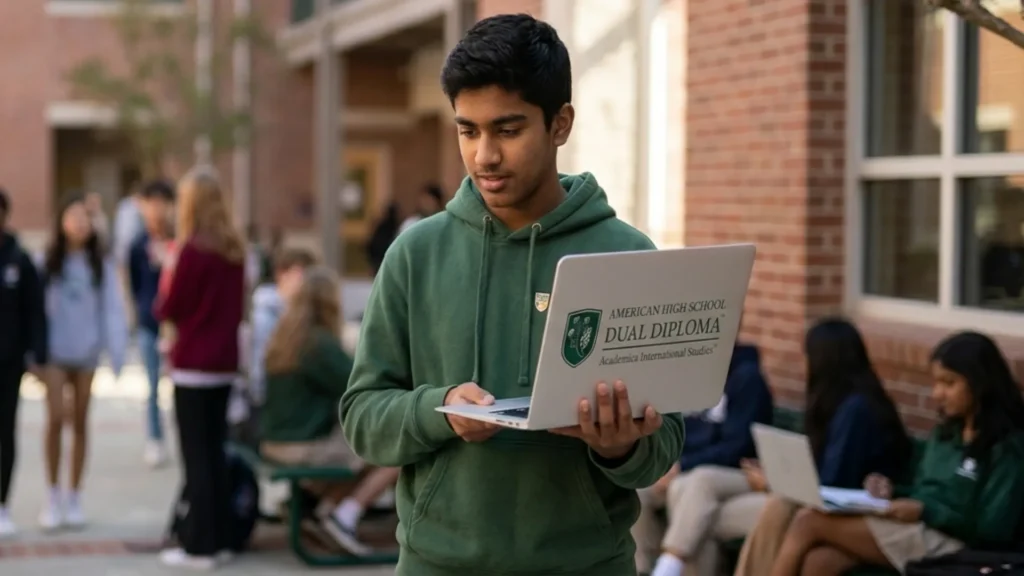
With the integration of digital systems into education, the role of the teacher is undergoing a gradual but significant transformation.
Programmes such as the AIS Dual Diploma ensure that if a student begins to fall behind in coursework, teachers based in the United States proactively reach out to the student, the parent, and the programme director at the home school. This creates a structured support system that addresses challenges early and keeps students academically engaged.
In this framework, teaching extends beyond one-directional classroom instruction and becomes a collaborative, two-way learning experience. Students have greater opportunities to interact with teachers individually, ask questions freely, and receive guidance tailored to their pace and learning needs.
How Does Online Learning Improve Access to Education?
Modern education has made world-class learning more accessible than ever before. A child studying in a government school in a small town in India no longer needs to relocate to a metropolitan city to experience high-quality education. The gap between aspiration and access is steadily narrowing.
Institutions such as Academica have also contributed significantly to the growth of both public and private online education in the United States, supporting not only their own schools but also external institutions through digital learning programmes and academic services.
Why Does Modern Education Matter for the Future?
Modern education is best understood not as a replacement for traditional systems, but as an expansion of what learning can become.
It brings together personalisation, technology, and continuous academic support to create an educational experience that is more flexible, inclusive, and responsive to individual needs.
In the end, modern education quietly redefines the meaning of a classroom itself — not by removing it, but by extending it into spaces once considered beyond its reach.
Frequently Asked Questions
Modern education is a learning approach that combines technology, personalised learning, and flexible teaching methods to make education more accessible, interactive, and student-focused.
Online learning allows students to study from anywhere, access digital learning materials easily, learn at their own pace, and stay connected with teachers through virtual platforms.
The AIS Dual Diploma Programme allows students to earn an accredited United States high school diploma while continuing their regular schooling in their home country.
Personalised learning helps students learn according to their individual pace and understanding. It gives additional support to students who need more time while allowing faster learners to progress comfortably.
Technology supports modern education through digital classrooms, online assignments, interactive learning tools, virtual communication, and real-time academic tracking.
Teachers are becoming mentors and academic guides who provide personalised support, regular feedback, and one-on-one interaction instead of only traditional classroom instruction.
Modern education makes quality learning accessible to students regardless of their location, helping bridge the gap between educational opportunities and accessibility.